top of page

FREE Resources for Educators

Explore our playful, hands-on financial literacy resources, complete with slideshows, lesson plans, and activity guides. Click “Access Lesson Plans” to fill out a quick form, and we’ll email your resources within 2 business days.

Grades K-5

Our K-5 resources use a playful, hands-on approach that makes financial literacy fun and accessible for younger learners. Through interactive activities, engaging visuals, and teaching through play, students build early money skills in bite-sized lessons that keep them interested and excited to learn.

541fed2d-bcb9-480d-a1e2-3e5cae20276d.png
What is Money?

Students learn that money is used to buy goods and services and understand why it matters in everyday life.

01712f76-b27f-4cd7-abc3-ef776bc24ffd.png
Saving Money

Students discover why people save money and how saving can help them reach future goals.
 

e598f723-842f-42b1-88d6-6583aa5f7e75.png
Needs vs. Wants

Students explore the difference between things people need and things people want through simple, relatable examples.
 

b8a62047-5b63-4a16-ad15-41bbb39bcae8.png
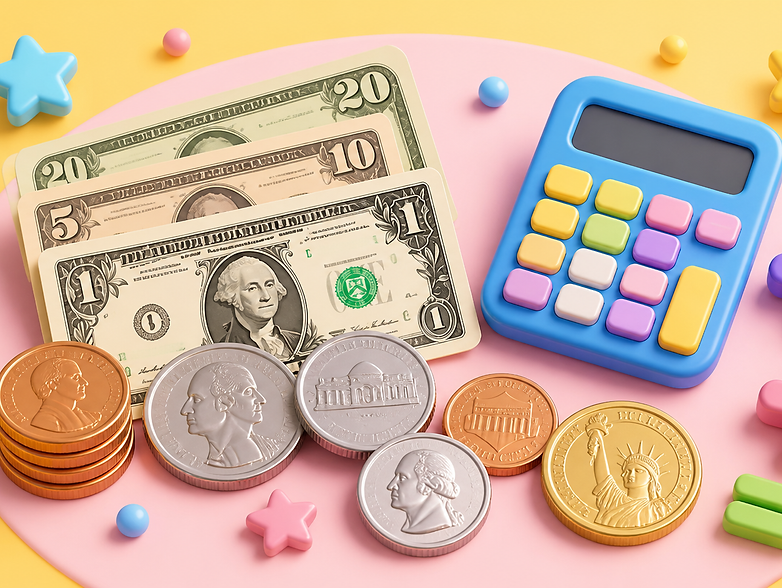
Counting Money

Students identify and practice counting coins and bills to find the total amount of money they have.

73c40beb-0bf0-44e9-9c13-4405b14d75c0.png
Earning Money

Students learn that money can be earned by working, helping others, or completing tasks.
 

85e2835b-8c1d-4e86-b03d-1abd86d3d6f8.png
Goods vs. Services

Students learn to tell the difference between physical items people buy and services people pay for.
 

Grades 6-8

Our 6-8 resources use a more project-based learning approach that helps students apply financial concepts in meaningful, real-world ways. These lessons encourage critical thinking, problem-solving, and independence as students work through practical projects that deepen their understanding of personal finance.

Budgeting Basics
 

Students learn how to plan their money by separating what they earn, save, and spend.

Income and Paychecks

Students learn how to interpret a
paycheck.


Banking and Checking Accounts

Students explore how banks work and why people use checking and savings
accounts.

​

Taxes

Students learn that taxes help pay for public services like roads, schools, and parks.

Credit vs. Debit
 

Students learn the difference between debit and credit and how each is used to pay for things.

Interest

Students are introduced to how money can grow over time in a savings account.


Simple Investing
 

Students get an introduction to putting money to work for the future.

Entreprenuership
 

Students learn what it means to create and sell something of their own.

Advertisement Awareness

Students explore how ads influence buying decisions.
 

bottom of page